December 2025

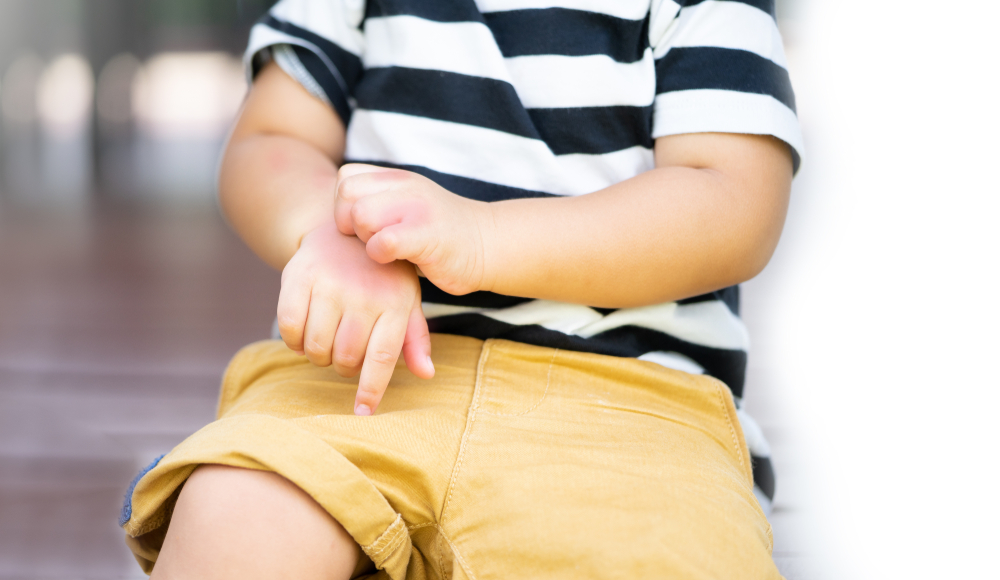
How can eating habits make your child’s skin healthier?

How can eating habits make your child’s skin healthier? Source: Registered Dietitian (Public Health) (UK), Ng Pui-Yu Many kids have dry skin or even eczema, and their parents work hard to find the right moisturizers and other skin care products for them. In fact, in addition to topical skincare products, we should also pay attention to children’s diets. The most direct way, of course, is to drink more water. How much water should be drunk? In fact, our body’s need for water is deeply influenced by the weather. For example, in dry weather, we need more water, as well as to account for children’s activity levels and how much they sweat. The water content in food also affects their need for water. If a child urinates every 3 to 4 hours and the urine is light yellow with no strong odor and the stool is not very hard and does not cause difficulty during bowel movements, it usually means that their water intake is sufficient. For children aged 2 to 5, they need about 4 to 5 cups of fluid a day, and water should be the main source. Unsaturated fatty acids, like omega-3, are also important for maintaining the integrity of cell membranes, which keep harmful substances out and keep the skin moist and flexible. Omega-3 fatty acids can also help calm immune responses that are too strong in people with skin allergies or eczema. We should also avoid certain foods, such as candies, cookies, and white bread, which

閱讀更多
Read More

Can mindfulness also help stabilize children’s emotions?

Can mindfulness also help stabilize children’s emotions? Source: Registered clinical psychologist, Dr. Felicia Lee Recently, many people have been learning mindfulness to manage their emotions and think more clearly. However, mindfulness can also help us stabilize children’s emotions. Mindfulness, also known as “jing-nim” in Chinese, is a concept that combines Eastern philosophy and Western science. Mindfulness is about consciously and non-judgmentally focusing our attention on the present moment. We are aware of where our focus is at this moment, and we do not think about whether something is right or wrong. We just observe and describe. So how can we use mindfulness to help stabilize children’s emotions? The most important thing is to stop first. This requires us to practice regularly, and through mindfulness practice, we will know what methods can be used to effectively stop ourselves or our children. Because sometimes children will stop when they hear their mother shout, but what can be done to stop them when their mothers are not around or when no one is around to advise them? This is an important thing we can practice with mindfulness. The second step is observation. What kind of mindset should we use to observe? We should observe with a non-judgmental mindset. When a child has emotions, we usually see their emotional outburst, and sometimes we have thoughts or critical words in our minds. If we describe this thought with a non-judgmental mindset and also feel our own emotions, we can see the child’s real needs through

閱讀更多
Read More

How to effectively calm children when dealing with parent-child conflicts?

How to effectively calm children when dealing with parent-child conflicts? Source: Parenting Education Specialist, Ken Sir From time to time, conflicts may arise between children and adults. In handling these conflicts, communication skills with children are very important, and there is a big difference between starting with “you” and starting with “I”. Once, I was at the elevator entrance and saw a child trying to press the elevator button, but another child pressed it first. The child’s emotions immediately became volatile, and although the mother tried to bend down and deal with the situation, she found it difficult to calm the child’s emotions. What was involved in the situation? This involves the mother using a few phrases, including “don’t cry”, “what do you want?” or “do you want me to go down to the next floor and let you press the button?” I want to remind parents that if they want to calm a child’s emotions, they should avoid using these types of phrases. If we want to calm a child’s emotions, we can try using “I” at the beginning of the sentence, such as “I see you…”, “I know that you really want…”, and “Mom and Dad understand you”. When a child hears these words from their perspective, they will feel that you are on their side rather than opposing them. In this way, through your body language—calming and hugging—it helps the child gradually learn to be calm and then slowly instill what you want to teach them. This

閱讀更多
Read More
error: Content is protected !!